
When selecting a backpack for travel, hiking, or daily use, understanding its volume is critical to ensuring it meets your needs. Backpack volume—measured in liters (L) or cubic inches (CI)—determines how much gear you can carry. However, some listed capacities can be misleading or measured inconsistently. This guide provides practical methods to accurately determine a backpack’s volume yourself.

Why Backpack Volume Matters
Volume directly impacts functionality:
- Trip Duration: Daypacks (10–30L) vs. multi-day packs (50–80L).
- Comfort: Overloading strains your back; underloading wastes space.
- Activity-Specific Needs: Camera gear, climbing equipment, or textbooks require tailored capacities.
3 Methods to Measure Backpack Volume
1. The Fill-and-Calculate Method
Tools Needed: Measuring tape, calculator, filler material (packing cubes, rice, or plastic bags).
Steps:
- Empty the backpack and fully open all compartments.
- Fill the main compartment with uniform filler material (e.g., 1L packing cubes). Pack tightly to mimic real-world use.
- Count the filler units required to fill the bag. Multiply by the unit volume (e.g., 20 × 1L cubes = 20L).
- Repeat for external pockets and add to the total.
Pros: Simulates real-world packing.
Cons: Time-consuming; requires filler materials.
2. Mathematical Calculation
Tools Needed: Measuring tape, calculator.
Steps:
- Measure dimensions (length × width × depth) of each compartment in centimeters or inches.
- Calculate compartment volume:
- Rectangular compartments: Length×Width×DepthLength×Width×Depth.
- Cylindrical compartments (e.g., roll-top bags): π×Radius2×Heightπ×Radius2×Height.
- Irregular shapes: Break into smaller geometric shapes.
- Convert units (if needed):
- 1 L=1,000 cm31L=1,000cm3 or 1 CI=16.387 cm31CI=16.387cm3.
- Example: A 30cm × 20cm × 40cm compartment = 24,000 cm³ = 24L.
- Sum all compartments for total volume.
Pros: Precise for structured bags.
Cons: Less accurate for flexible or irregular designs.
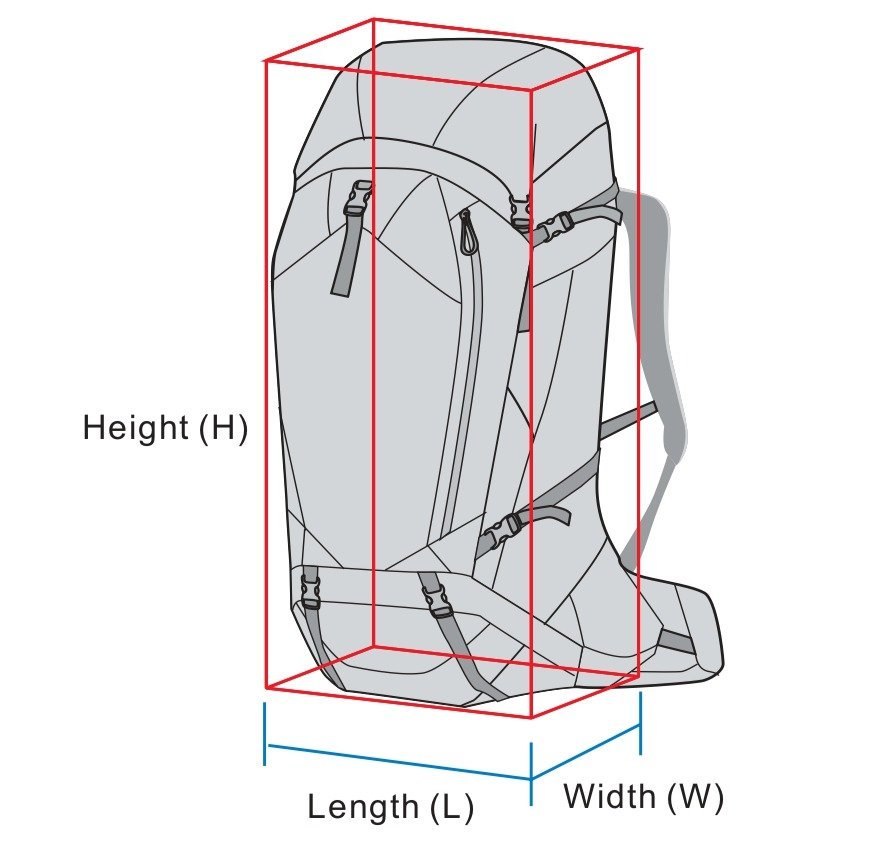
3. Manufacturer Specifications & Industry Standards
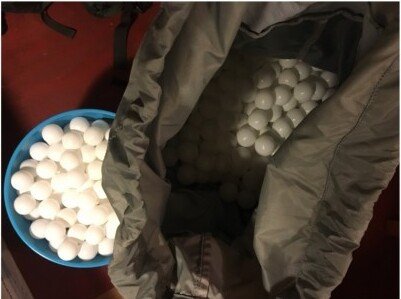
Most brands measure volume using ASTM International F2153 standards:
Process: Fill the pack with small plastic pellets, then pour them into a graduated cylinder.
Limitations: Excludes external pockets and assumes perfect packing efficiency.
Pro Tip: Compare “usable volume” by checking reviews or testing with your own gear.
Key Considerations
Compression Straps: Adjustable straps can reduce effective volume by 10–15%.
Material Flexibility: Stretchy fabrics (e.g., nylon) expand beyond listed capacity.
Regional Differences: U.S. brands often use cubic inches; European brands use liters (1L≈61 CI1L≈61CI).
Final Tips
Test a pack with bulky items (sleeping bags, jackets) if you carry irregularly shaped gear.
For travel, outdoor backpack prioritize packs with 35–45L (carry-on compliant) or 60–80L (checked luggage).
Looking for more information about bags? Check out this post about bags on Century Pioneer.